


GRP is used across construction, utilities, rail, industrial sites, water treatment, energy, fabrication and maintenance environments because it is strong, corrosion-resistant, lightweight and practical to handle on site.
But choosing the right GRP product is not always as simple as picking the first panel or profile that looks suitable. The correct choice depends on the application, loading, span, surface requirement, environment, fixing method and whether the material is being used for access, fabrication, safety or general site improvement.
This guide gives trade buyers a practical starting point when selecting GRP materials through GRP Express.
Start with the job, not the product name
The easiest way to choose GRP is to begin with what the material needs to do.
Are you creating a walkway, covering a trench, improving stair safety, building a lightweight frame, replacing corroded steel, or adding anti-slip protection to an existing surface?
Once the application is clear, the product route becomes much easier.
Common buying routes include:
- Flooring, walkways and platforms — usually GRP grating, solid top grating or anti-slip sheets.
- Fabrication and framing — usually GRP structural profiles such as angles, channels, box sections, flat bars and beams.
- Stairs and access routes — usually GRP stair treads, nosings, ladder rung covers or anti-slip strips.
- Edge protection and guarding — usually GRP handrail components, posts, rails, baseplates and fittings.
- Installation and fixing — usually clips, bolts, washers, adhesives and accessories.
GRP Express is structured around these buying routes so customers can move from application to product without unnecessary delay.
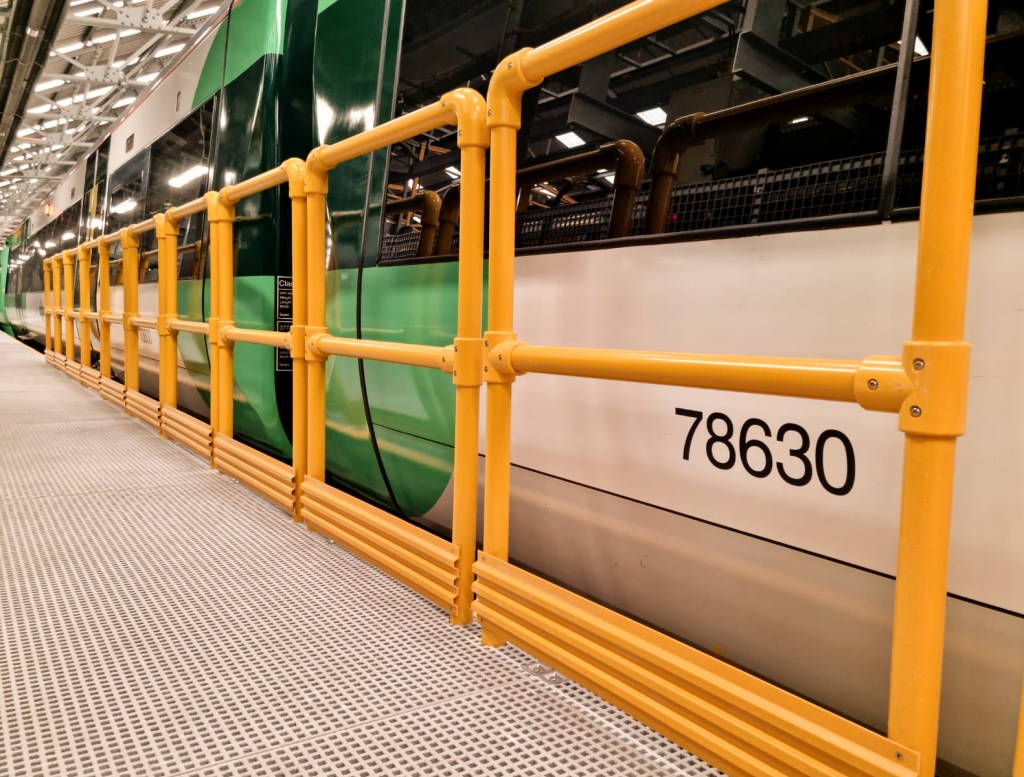
GRP grating: for flooring, access and drainage areas
GRP grating is one of the most commonly used GRP products because it suits a wide range of access and flooring applications.
It is typically used for:
- Industrial walkways
- Maintenance platforms
- Trench covers
- Drainage areas
- Access routes
- Plant-room floors
- Stairs and landings
- Wet or corrosive environments
The most common options include standard mesh, mini mesh, micro mesh and solid top grating.
Standard mesh grating
Standard mesh GRP grating is a strong general-purpose choice for many industrial flooring and access applications. It provides an open mesh format, allowing water and debris to pass through the panel, while the gritted top surface helps improve underfoot grip.
It is often the first option to consider where open mesh flooring is acceptable and where the required loading and support span can be achieved.
Mini mesh and micro mesh grating
Mini mesh and micro mesh grating have smaller openings than standard mesh. They are useful where there is a requirement to reduce the risk of smaller objects passing through the floor or where a more enclosed walking surface is preferred.
They can be particularly useful in pedestrian areas, maintenance routes and areas where dropped-object control is a consideration.
Solid top grating
Solid top GRP grating gives a closed walking surface while retaining the corrosion resistance and anti-slip properties of GRP. It is often considered where open mesh is not suitable, or where a covered surface is preferred.
GRP profiles: for fabrication and lightweight structures
GRP structural profiles are used where a lightweight, corrosion-resistant alternative to steel, aluminium or timber may be required.
Common profile types include:
- Angles
- Channels
- Box sections
- Flat bars
- Tubes
- I-beams
- Structural sections
GRP profiles are commonly used for frames, supports, brackets, edging, fabrication work, access structures and general industrial assemblies.
When choosing a profile, consider:
- Required stiffness
- Span and support arrangement
- Connection method
- Exposure to chemicals, water or weather
- Whether the section will be drilled, cut or fabricated
- Compatibility with fixings and other GRP products
For many trade customers, profiles are bought alongside grating, fixings and handrail components as part of a wider material requirement.
GRP handrail components: for modular edge protection
GRP handrail components are used to form lightweight, corrosion-resistant edge protection and guarding.
For GRP Express, the focus is on components, not complete installed systems. That means customers can source posts, rails, baseplates, fittings and accessories for suitable modular handrail requirements.
Typical handrail component choices include:
- Posts
- Rails
- Baseplates
- Corners
- Joiners
- Fittings
- Kick plates and accessories where required
When selecting handrail components, check the application, fixing surface, height requirement, fixing method and whether the components need to integrate with grating, platforms, stair treads or existing structures.
Stair treads, nosings and ladder safety products
Stairs, ladders and access routes are common areas for GRP safety upgrades.
GRP stair safety products are often used where existing steps are worn, slippery, exposed to weather or located in industrial environments.
Products may include:
- GRP stair treads
- Anti-slip stair nosings
- Ladder rung covers
- Step covers
- High-visibility nosing options
When choosing stair safety products, consider the stair width, tread depth, fixing method, colour contrast, expected foot traffic and whether the area is internal, external, wet or exposed.
For many trade customers, yellow or contrasting nosings are used to improve visibility on access routes.
Anti-slip sheets and strips: for existing surfaces
Anti-slip GRP sheets and strips are used to improve safety on existing floors, ramps, decks, walkways and steps.
They are often chosen where replacing the full structure is not required, but the walking surface needs improvement.
Typical applications include:
- Slippery walkways
- Ramps
- Timber decking
- Concrete steps
- Steel plates
- Access covers
- Industrial floors
- High-traffic routes
When selecting anti-slip products, consider the surface they will be fixed to, the level of exposure, foot traffic, fixing method and whether a contrasting colour is required.
Fixings and accessories: do not leave them until the end
Fixings are often treated as an afterthought, but they are essential to getting the job right.
Depending on the product, you may need:
- Grating clips
- Dome washers
- Bolts
- Screws
- Adhesives
- Drill bits
- Edge trims
- Support accessories
The fixing method should suit the material, support structure and application. For example, fixing GRP grating to a support frame is different from bonding an anti-slip strip to an existing step.
If in doubt, choose the material and fixing method together rather than treating them as separate decisions.
Key questions before ordering GRP
Before placing an order, it is worth checking the following:
- What is the application?
Flooring, fabrication, access, stair safety, edge protection or surface improvement. - What size is required?
Check panel size, profile length, width, thickness and whether full panels can be cut on site. - What is the support arrangement?
For grating and load-bearing products, span and support positions are critical. - What environment is it going into?
Internal, external, wet, marine, chemical, industrial, exposed or high-traffic. - Is an anti-slip surface required?
Most GRP access products include a gritted surface, but the level of grip and product type still matter. - Is colour important?
Colour can affect visibility, contrast and practical site use. - What fixings are needed?
Check clips, bolts, washers, adhesives and installation accessories before ordering.
Full panels can be the most efficient route
Where possible, GRP Express is set up to support straightforward full-panel and standard-material buying. This helps trade customers order material quickly, receive standard products and cut or trim on site where suitable.
This is often the most efficient route for:
- GRP grating panels
- Anti-slip sheets
- Standard profiles
- Stair safety materials
- Repeat trade supply
For customers who need support with dimensions, drawings, sketches or repeat schedules, guidance is available before ordering.
Need help choosing?
If you are unsure which GRP material is right for the job, start with the application.
GRP Express can help customers identify whether they need grating, profiles, handrail components, stair safety products, anti-slip sheets or fixings.
The aim is simple: make GRP easier to specify, easier to source and easier to buy.
Ready to start?
Browse the GRP Express range or use the product guidance routes to find the right material for your application.
Listen: choosing the right GRP material
Prefer to listen? This dedicated GRP Unpacked episode turns the material-selection guide into a practical conversation. A full accessible transcript is included.
Leave a Reply