

GRP grating
Anti-slip GRP grating for real industrial access.
Shop standard mesh, mini mesh and solid top grating, then use load, span and cut-to-size support to specify the right route.
GRP grating is selected where corrosion, weight, slip risk, electrical sensitivity and maintenance access matter. Use this page to choose the surface type, check the design inputs and move into the correct product range.
Choose by surface and opening
A useful grating page should help users pick the correct product family before pushing them into a basket. These are the core GRP Express grating routes.
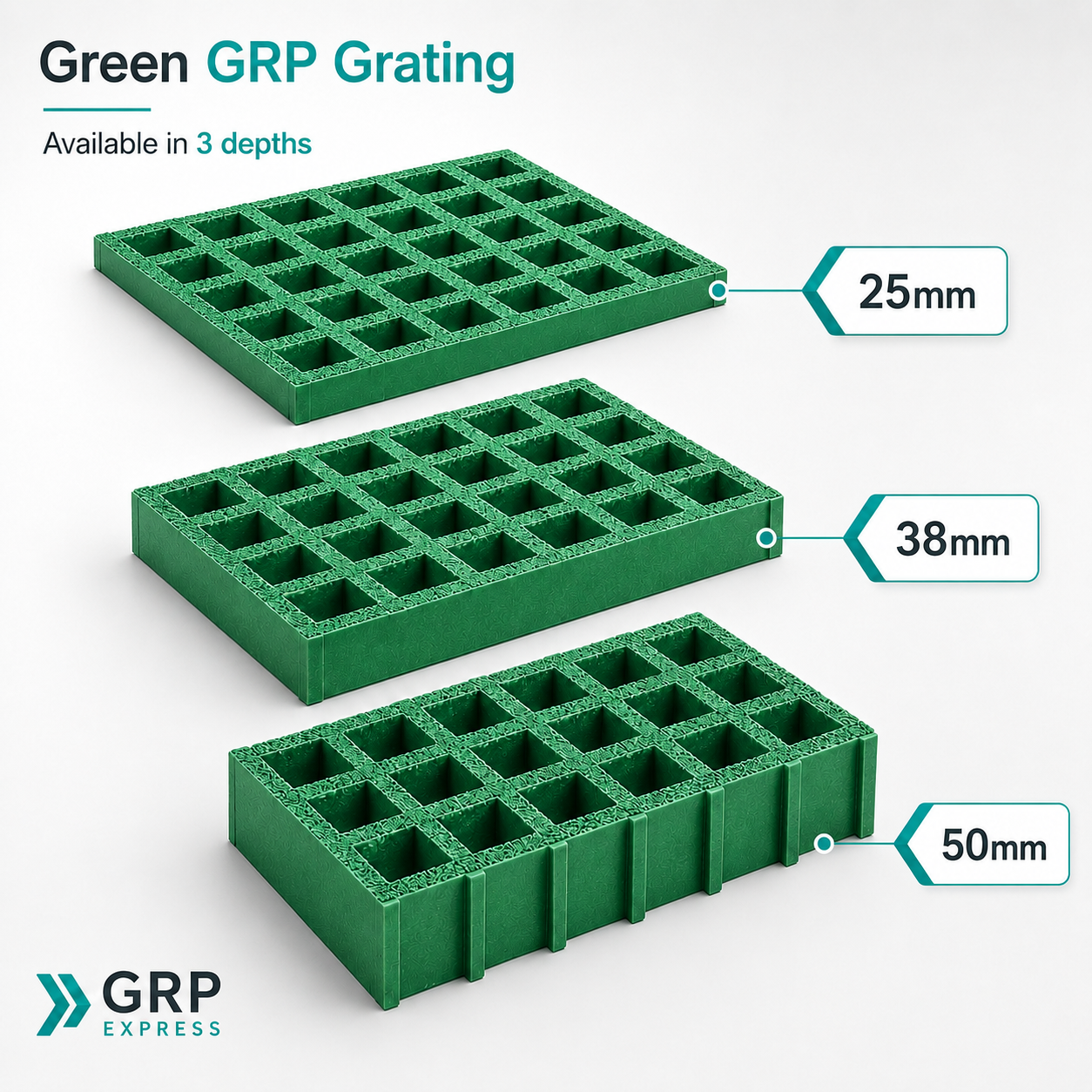
Standard Mesh
Open mesh grating for drainage, ventilation and general industrial access.
Shop standard mesh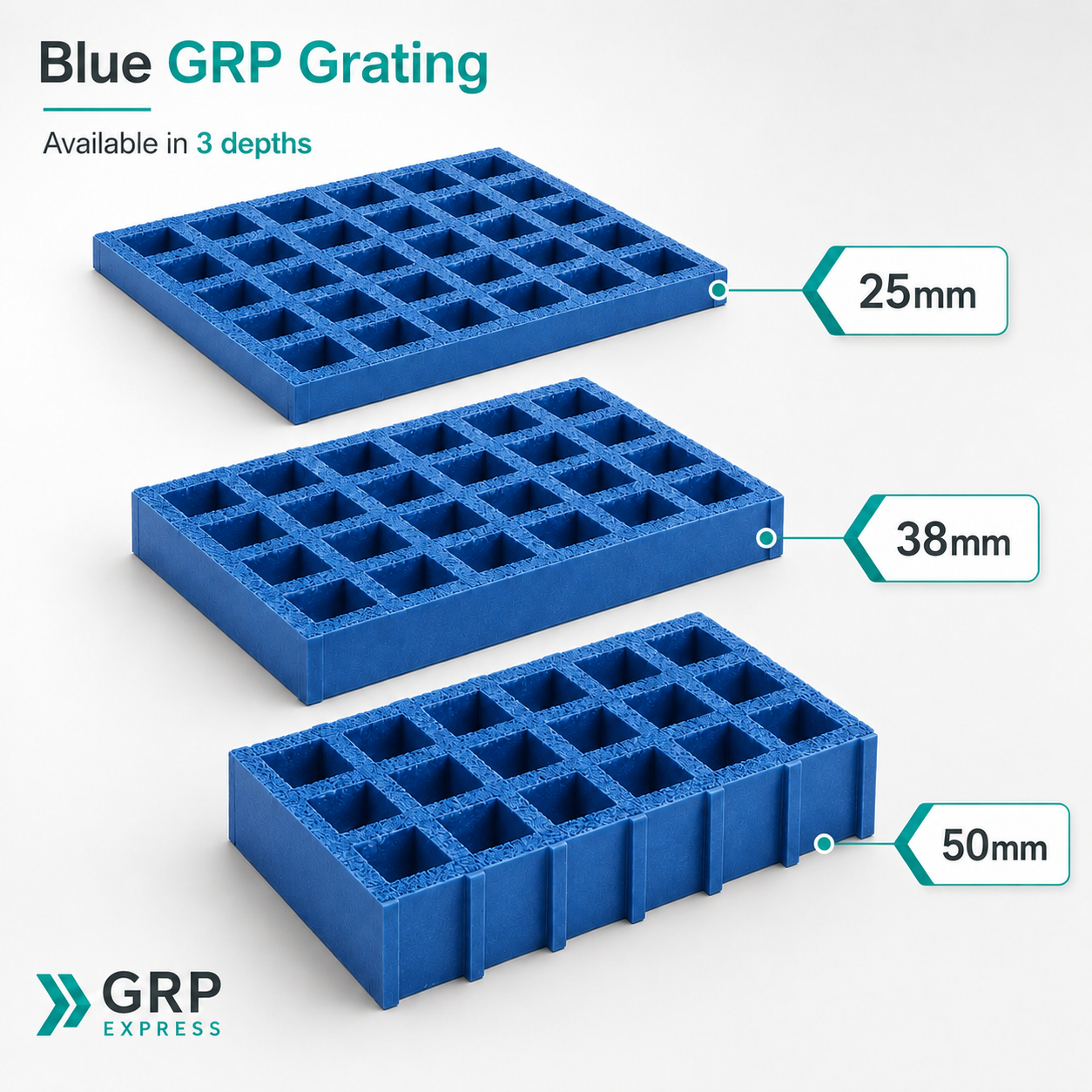
Mini Mesh
Reduced openings for pedestrian comfort, small wheels and dropped-object risk.
Shop mini mesh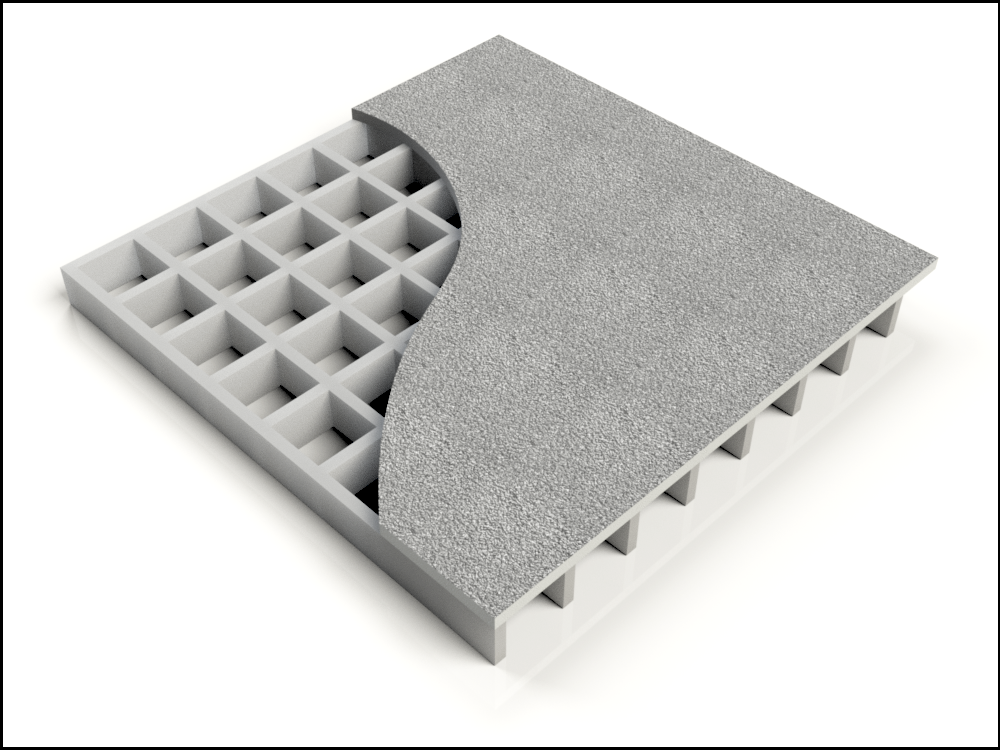
Solid Top
Closed anti-slip surfaces for covers, debris control and visual screening.
Shop solid top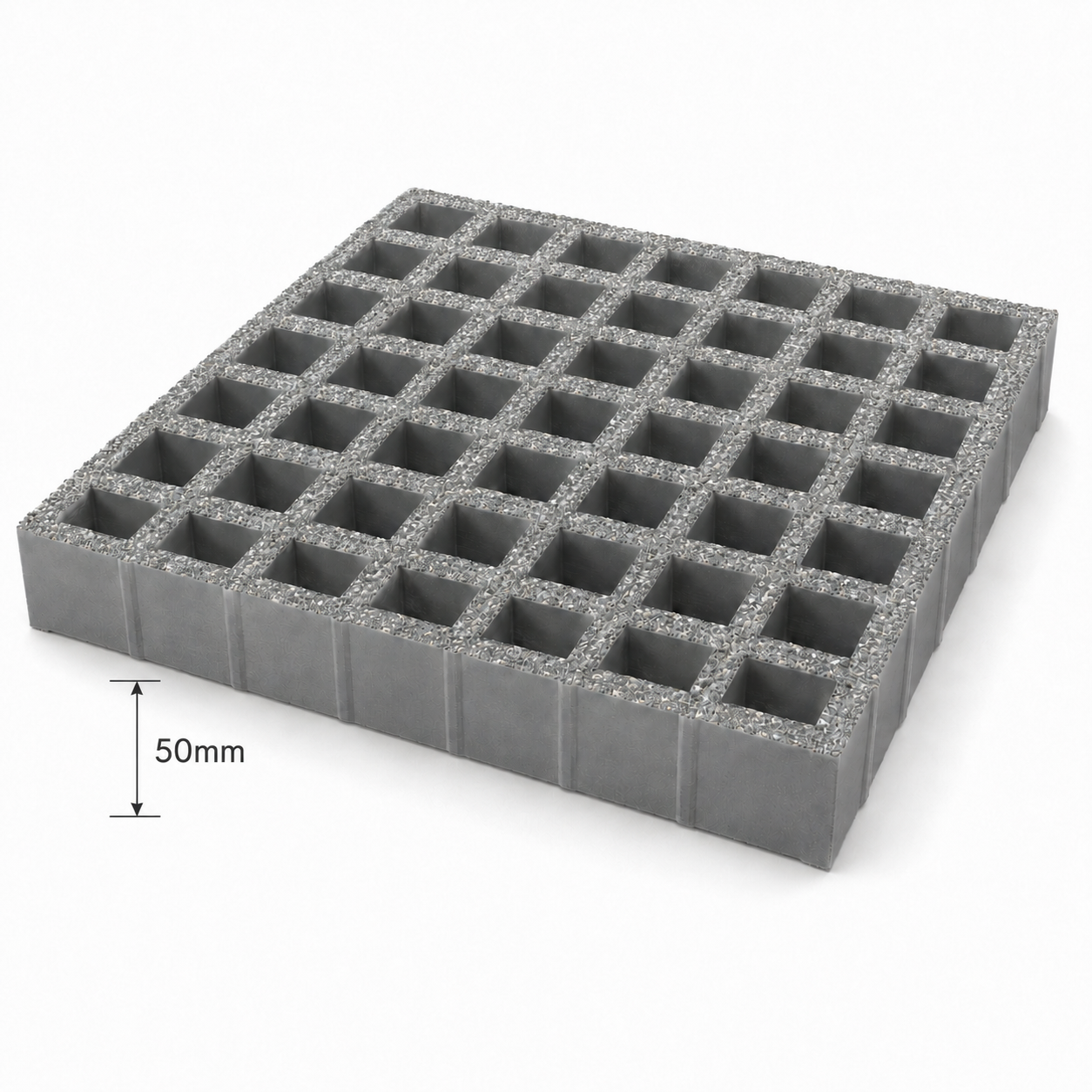
Slab Route
Pultruded slab-style route for project-led flooring and wider-span discussions.
View slab routeWhy GRP grating is specified
The buying decision is usually a mix of safety, durability and practical installation rather than price alone.
Compare grating routes
Use the table to move from application to a practical product choice.
| Type | Use when | Technical checks | Route |
|---|---|---|---|
| Standard mesh | General walkways, platforms, trench covers and drainage-friendly access. | Depth, span, load, support direction, clip type and panel size. | Shop standard mesh |
| Mini mesh | Small object risk, footwear confidence, public-facing routes and light wheel traffic. | Opening size, load, wheel risk, cut-outs and fixing pattern. | Shop mini mesh |
| Solid top | Closed walking surfaces, service covers, spill/debris control and screening. | Weight, support centres, drainage strategy, edge treatment and fixing access. | Shop solid top |
| Pultruded slab route | Project flooring where direction, stiffness or wider spans need closer review. | Load path, deflection, bearing, profile depth and installation detail. | View slab route |
Preliminary grating selector
Use this calculator as a quick route-finder. It is not a structural certificate, but it helps customers understand when a product choice needs more checking.
Preliminary result
Final selection must be checked against the actual product data, support centres, fixings, resin, deflection expectations and project standards.
Applications that commonly drive grating choice
Link the product route to the site environment so search visitors find their own use case quickly.
Technical grating checkpoint
Select grating by system performance—not depth alone
A defensible grating specification combines construction type, clear span, load case, deflection, aperture, surface, resin, fire evidence, support and fixing. Panel depth by itself does not establish suitability.
| Specification area | What to establish | Engineering boundary |
|---|---|---|
| Moulded open mesh | BS 4592-6 with BS 4592-0 common requirements. | Verify moulded bearing direction, depth, clear opening, load table and panel restraint. |
| Pultruded/open bar | BS 4592-4 with BS 4592-0 common requirements. | Primary bearing bars are directional; cross-rods do not make the panel equally structural both ways. |
| Solid plates | BS 4592-5 with BS 4592-0 common requirements. | Distinguish a structural plate from a thin cover bonded to a grating or existing floor. |
| Machinery access | BS EN ISO 14122-2:2016 may apply to permanent platforms and walkways serving stationary machinery. | Do not cite it as the universal standard for every building, trench or public route. |
Important: Never transfer a span from another manufacturer, depth or mesh. Use the load/deflection data for the exact supplied construction and support direction.
Primary references: relevant current parts of BS 4592; ISO 14122-2:2016 where machinery access is in scope; and project-specific load, fire, chemical and access requirements.
Expert grating selection layer
Specify the installed grating system—not the panel in isolation
A defensible selection combines the exact product, clear unsupported span, support layout, load case, deflection limit, openings, environment, surface and fixing arrangement. Panel depth alone cannot establish suitability.
Structural basis
- Define uniformly distributed, concentrated, wheeled and maintenance loads separately.
- Use the manufacturer load table for the exact mesh, depth, resin and span condition.
- Check both resistance and serviceability; excessive movement can govern before strength.
- Confirm support width, edge support and continuity around openings.
Use and environment
- Select opening size around pedestrians, dropped objects, drainage and ventilation.
- Assess wet, oily, icy or process contamination in the slip-risk assessment.
- Match resin and fire performance to the project specification and exposure.
- Plan cleaning access, UV exposure and inspection.
Installed details
- Keep load-carrying bars or panel directions aligned with verified supports.
- Support cut edges, narrow strips, penetrations and removable panels.
- Specify hold-down and panel-to-panel fixings for the actual substrate.
- Seal or finish cut edges where the product instructions require it.
Standards route
For UK industrial flooring, identify whether BS 4592-4, BS 4592-5 or BS 4592-6 is relevant to the product form. Where the primary function is access to machinery, BS EN ISO 14122-2 may govern the walkway or platform. Referencing a standard is not evidence that every product or installation complies: confirm the project clauses and product evidence.
Expert grating FAQs
Can panel thickness alone determine the allowable span?
No. Mesh construction, bar geometry, product type, load case, deflection criterion, support condition and manufacturer test data all affect the permissible span.
Does a higher ultimate load automatically make a panel suitable?
No. The installed floor must also meet the required serviceability, deflection, local-load, fixing, slip and opening criteria for its intended users.
Which standard applies to GRP grating?
The route depends on product form and application. BS 4592 includes parts for open-bar, solid-plate and moulded open-mesh products; machinery-access platforms and walkways may fall under BS EN ISO 14122-2.
When does a grating order need technical review?
Seek review for unusual loads, wheeled traffic, large or irregular openings, non-standard supports, long spans, chemical or fire requirements, public access or any unverified product configuration.
Specification support
Match GRP grating to the wider access package
Grating choice often depends on the structure around it: support profiles, fixing method, anti-slip requirement and delivery route all affect the final order.
Plan GRP grating with connected technical checks
Use these GRP Express resources to move from panel choice into waste planning, drawings, chemical exposure and screen guard requirements.
Panel optimiser
Estimate panels, offcuts, fixing clips and quote notes before cutting.
Optimise panelsBIM and CAD
Prepare model, drawing and schedule requests for project review.
Open BIM resourcesChemical resistance
Check resin route and exposure assumptions before specifying grating.
Check resin guidanceMachine guards
Use GRP mesh and profiles for non-conductive screen guard planning.
Plan screen guards