
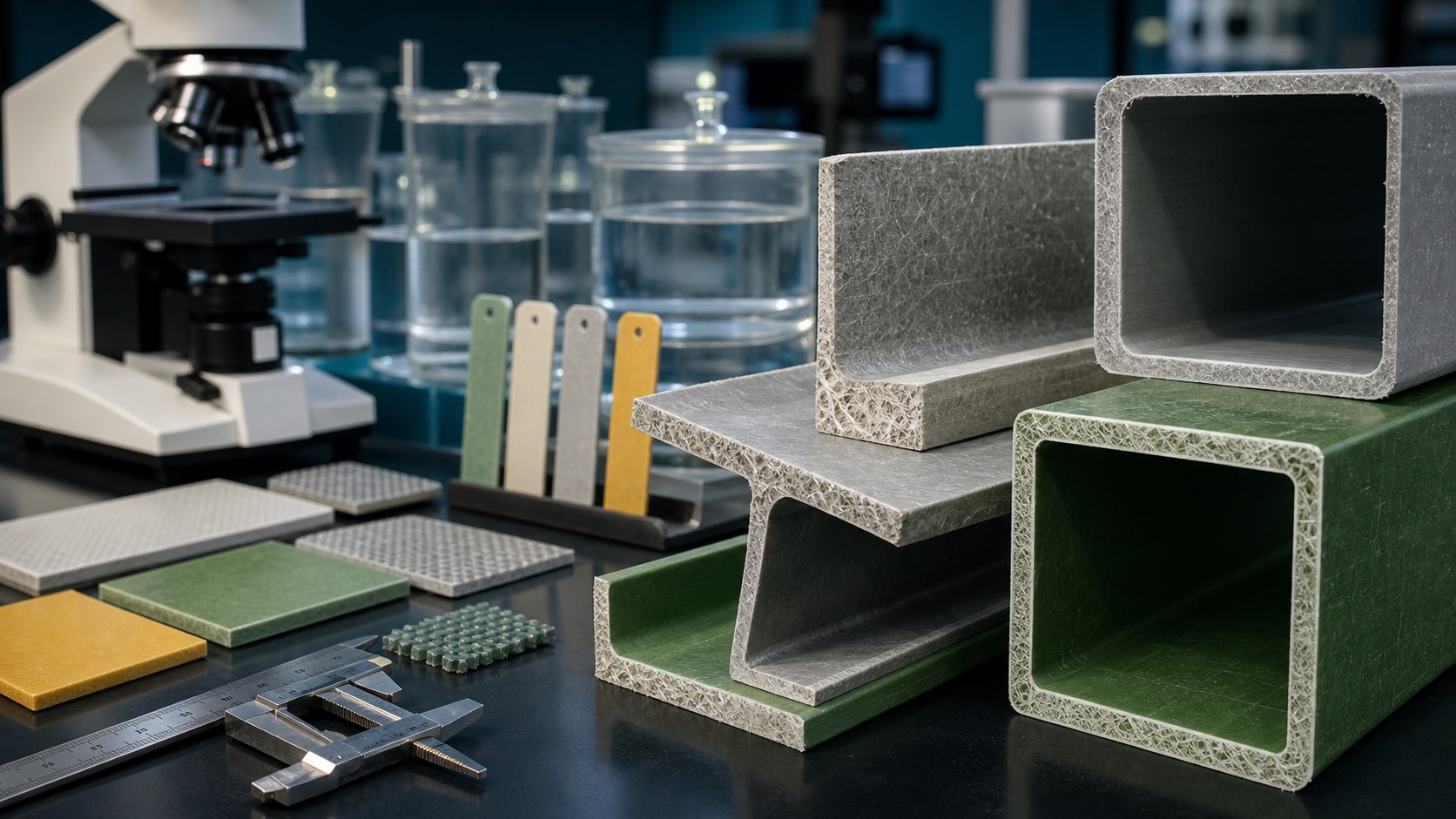
Material properties
GRP material properties for access, support and harsh environments.
A practical guide to corrosion resistance, electrical behaviour, weight, slip surface, resin choice, fire questions and fabrication routes before selecting GRP products.
Why GRP gets specified
GRP combines glass reinforcement with a thermoset resin matrix. For access products, the buying argument is usually not one single property; it is the combined value of corrosion resistance, slip performance, low maintenance, weight reduction and preparation flexibility.

Access safety
Gritted surfaces, contrast colours and open or closed grating formats support safer movement around wet and industrial access routes.
View grating routes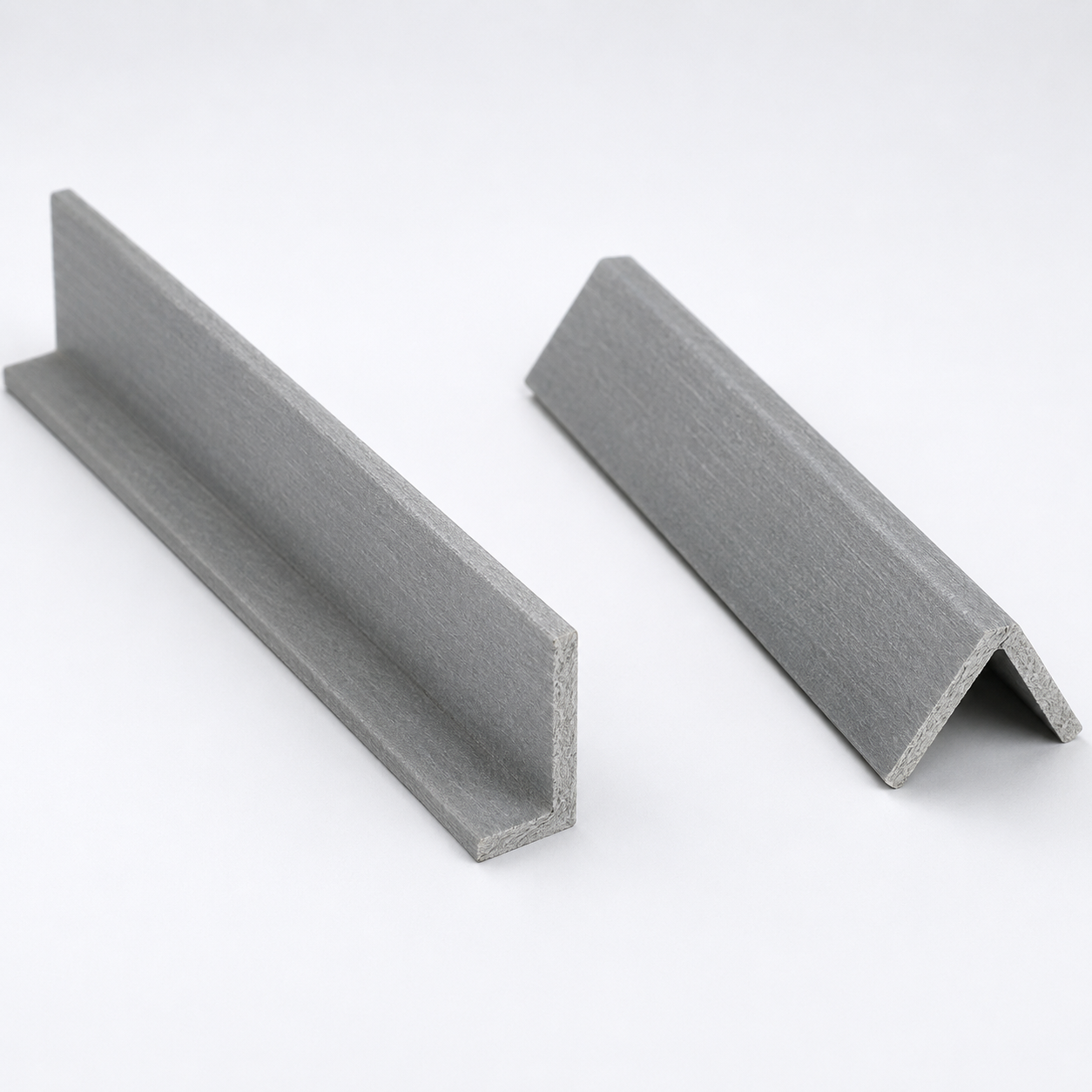
Non-metallic support
GRP can be useful around electrical, data centre, utility and corrosive environments where metallic systems bring extra maintenance or safety considerations.
View profile guide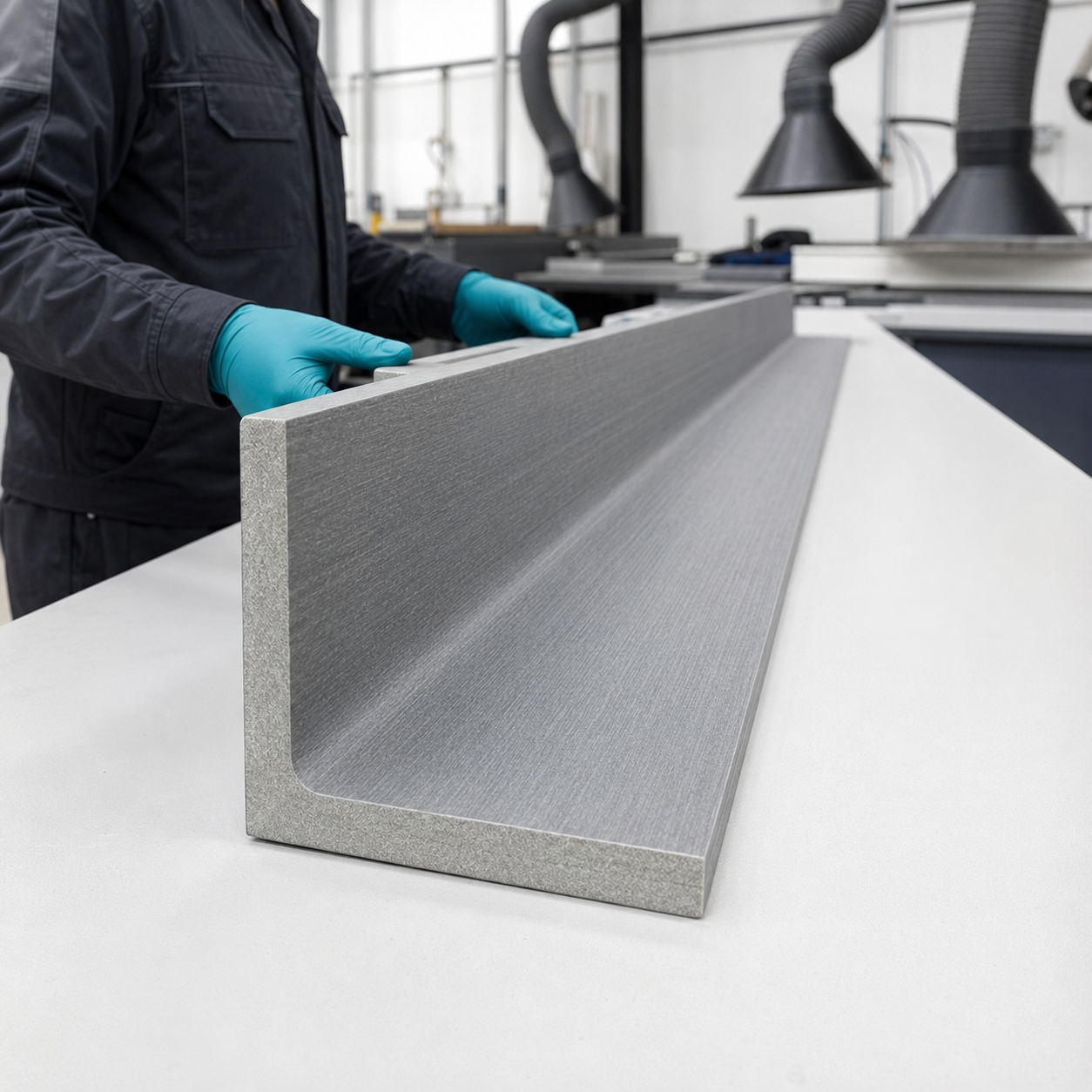
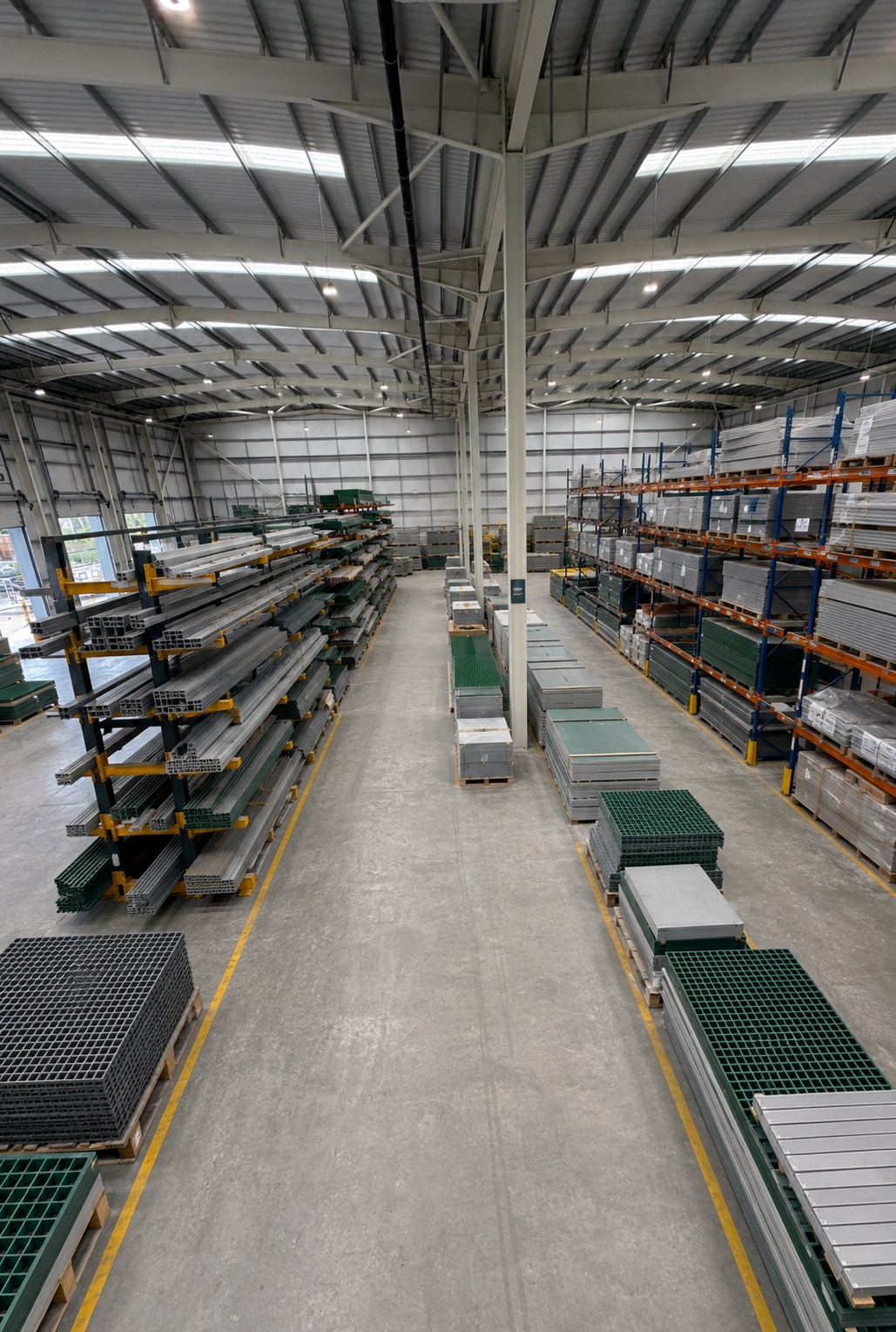
Fabrication flexibility
Panels and profiles can be cut, drilled, notched and prepared for repeat layouts, covers, risers and CNC-style project shapes.
Plan cut to sizeProperty guide for specification
| Property | What it means | Design questions | Useful pages |
|---|---|---|---|
| Corrosion resistance | GRP does not rust like steel and can reduce coating and repainting cycles. | What chemicals, salt, water, UV and cleaning products are present? | Water & wastewater, marine |
| Strength-to-weight ratio | Lower weight helps with retrofit, rooftop, riser, manual handling and replacement projects. | What panel size, span, lifting access and support layout are available? | Load calculator, cut to size |
| Electrical behaviour | GRP is non-conductive and often considered where metallic access materials are less desirable. | Is this a substation, data centre, cable route or electrically sensitive plant area? | Electrical infrastructure, data centres |
| Slip resistance | Gritted surfaces improve underfoot confidence in wet, oily, outdoor and washdown routes. | Is the area wet, oily, sloped, external or regularly cleaned? | Grating, stair treads |
| Resin and fire route | Resin choice affects chemical resistance and project compliance discussions. | Is a fire rating, resin type or chemical resistance requirement specified? | Technical support |
| Fabrication | GRP can be cut and drilled with appropriate tools and edge preparation. | Are there holes, notches, service openings, cut-outs or repeated shapes? | Installation, cut-to-size |
Specification checklist
Before asking for a technical view, capture the site conditions. This gives GRP Express a proper starting point and avoids vague material claims.
Route by site problem
Wet works, marine, food, chemical and outdoor access.
View sectorsData centres, substations, cable routes and non-conductive access.
Electrical routeRooftops, risers, retrofit access and replacement work.
Plan preparationGrating spans, handrail duty and support-centre questions.
Use calculatorsNeed a material route checked?
Send the exposure, product type, span/load, resin or fire requirement and any drawing. We can help route the enquiry without overclaiming or underspecifying.
Using GRP material properties correctly
Pultruded GRP is an engineered composite, not an isotropic substitute for steel or aluminium. Property values depend on fibre direction, reinforcement architecture, resin system, test method, conditioning and product grade.
| Property group | Use in design | Common error to avoid |
|---|---|---|
| Longitudinal and transverse modulus | Member deflection, load sharing and local response | Applying the longitudinal value in every direction |
| Tensile, compressive, flexural and shear data | Resistance checks for the governing load mode | Treating one test strength as a universal allowable stress |
| Density and thermal expansion | Self-weight, movement joints and interfaces with other materials | Ignoring differential movement in restrained assemblies |
| Water uptake, chemical and temperature resistance | Environmental reduction and resin selection | Assuming “corrosion resistant” means suitable for every chemical and concentration |
| Fire behaviour | Project fire strategy and product selection | Using a marketing label without the test method, classification and product scope |
For BS EN 13706 procurement, state the required grade or declared property set and request traceable product documentation. Separate characteristic test data, design values and project acceptance criteria.
Engineering note: Final member and connection design must use the declared properties for the exact profile, resin system, span, restraint, environment and load duration. Generic GRP values are not a substitute for project-specific verification.
Material-data interpretation guide
Use the property that matches the direction, duration and design check
A single “strength of GRP” value is not meaningful. Pultruded profiles have directional properties, and published typical test values are not automatically characteristic or design values for every shape, environment or service life.
Identify the value
- Longitudinal or transverse direction.
- Tension, compression, bending, shear or bearing.
- Modulus, strength, strain or thermal property.
- Test method, specimen and exact product family.
Convert to design use
- Distinguish typical, minimum and characteristic data.
- Apply the required factors and conversion basis.
- Allow for temperature, moisture, chemicals and duration.
- Check serviceability separately from resistance.
Verify the system
- Member geometry and stability.
- Holes, joints and local load introduction.
- Fire performance for the exact resin and product.
- Manufacturing tolerances and quality evidence.
Standards have different jobs
BS EN 13706 addresses pultruded-profile designation, testing and requirements. PD CEN/TS 19101:2022 provides a structural-design framework for resistance, serviceability, durability, fire and joints. Neither supports transferring an unrelated datasheet value to a different product.
Material-properties FAQs
What is the difference between a typical and design value?
A typical value describes representative test performance. A design value requires the appropriate statistical basis, factors, environment, duration and governing design method.
Why are longitudinal properties usually different?
Pultrusion places substantial continuous reinforcement along the profile length, while transverse response relies on a different reinforcement and resin contribution.
Does a higher strength always mean a better profile?
No. Stiffness, stability, connections, durability, fire, dimensions and serviceability can govern before the headline material strength.
Can one datasheet cover every profile shape?
Only where the manufacturer explicitly defines that scope. Verify the exact series, laminate, dimensions, resin and test basis before using the data.
Material-property checks before specification
Material-property figures should be read with the product route, support layout, fixings, exposure and installation detail. A product data point is not the same as an installed design check.
Pultruded profile context
Review BS EN 13706 context when comparing GRP profile material grades.
BS EN 13706 listingChoose the product family
Compare grating, profiles, handrail, access systems and fixings before narrowing the detail.
GRP productsProject support
Send span, loading, environment and drawing details where duty or suitability needs checking.
Request technical supportFundamentals and evidence
Understand the material and check the evidence
Start with a plain-English introduction to GRP, then review product-weight information and the engineering evidence used to support specification decisions.