
Sustainability at GRP Express
Better use of material. Longer use in service.
Our approach begins before a panel is cut: specify carefully, reduce avoidable waste, keep useful material in service and use a responsible route for what remains.
A practical approach
Sustainability is a whole-life question, not a single claim.
GRP is a durable thermoset composite. It should not be described as automatically sustainable, and an installation should not be judged by material weight alone.
The useful comparison is the complete installed system: performance, service life, transport, support requirements, corrosion exposure, maintenance and replacement risk. Correctly specified GRP can contribute through long service life, low maintenance and fewer disruptive interventions.
Four practical priorities
Better environmental outcomes begin with everyday specification, cutting and handling decisions.
Buy the right specification
Match product type, depth, span, load, aperture, resin and finish to the actual installed duty.
Plan before cutting
Clear dimensions and consolidated cut lists improve yield and reduce unnecessary offcuts and repeat deliveries.
Keep useful GRP in use
Suitable offcuts can support smaller fabrications, samples, packers and other practical secondary uses.
Route residual material responsibly
Clean, segregated GRP that cannot be reused can be assessed for a specialist commercial recovery route.
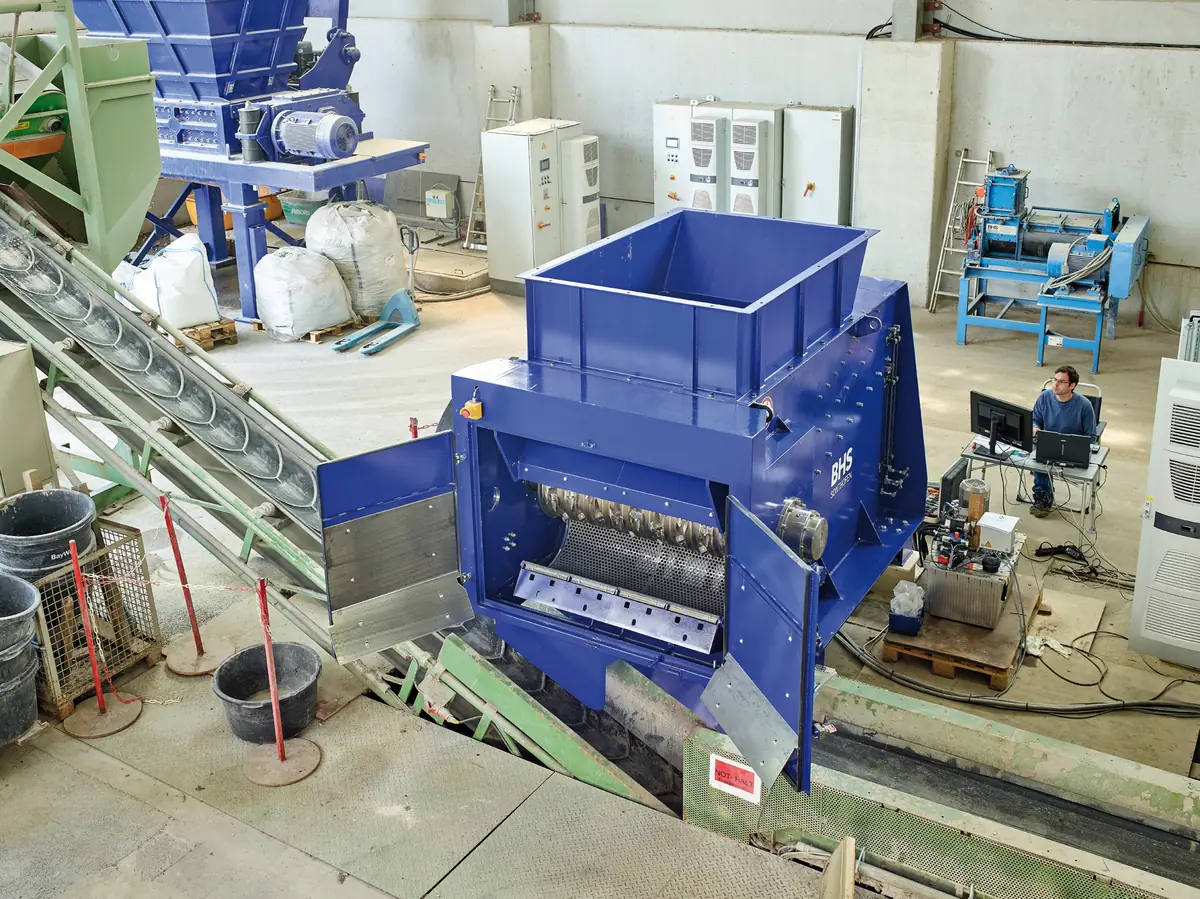
Specialist GRP recovery
Reduce first. Reuse next. Recover what remains.
GRP does not belong in a conventional mixed-plastic recycling stream. The wider Vital operation reduces waste at source, retains useful offcuts and segregates residual GRP.
Where direct reuse is not possible, a specialist process can use BHS equipment to reduce recovered GRP into prepared fragments for assessment and reuse in suitable products or manufacturing applications. Acceptance, cleanliness, fragment specification and the destination route must be confirmed before material is returned.
How the specialist GRP recovery process works
The supplied process route moves from controlled collection to specialist size reduction, prepared fragments and productive reuse. It is a commercial material route, not household plastic recycling.

Process illustration supplied for the GRP recovery programme. Project-specific acceptance and outputs should be confirmed before any material is sent.
Compare the complete installed duty
GRP and steel should be assessed as systems performing the same job, not as isolated kilograms of material.
| Consideration | GRP system | Traditional steel system |
|---|---|---|
| Corrosion management | Does not rust and normally avoids protective painting | May require coatings, inspection and treatment |
| Handling and installation | Lightweight components can reduce lifting requirements | Heavier components may require more lifting equipment |
| Routine maintenance | Typically led by inspection and cleaning | Can include painting, coating repair and corrosion control |
| Replacement risk | Long service potential in wet and corrosive conditions | Performance depends on environment and coating condition |
| Fair assessment | Compare load, span, deflection, supports, transport, installation, maintenance, design life and end-of-life route. | |
General guidance only, not a product-specific life-cycle assessment. The correct outcome depends on the application and an equivalent installed specification.
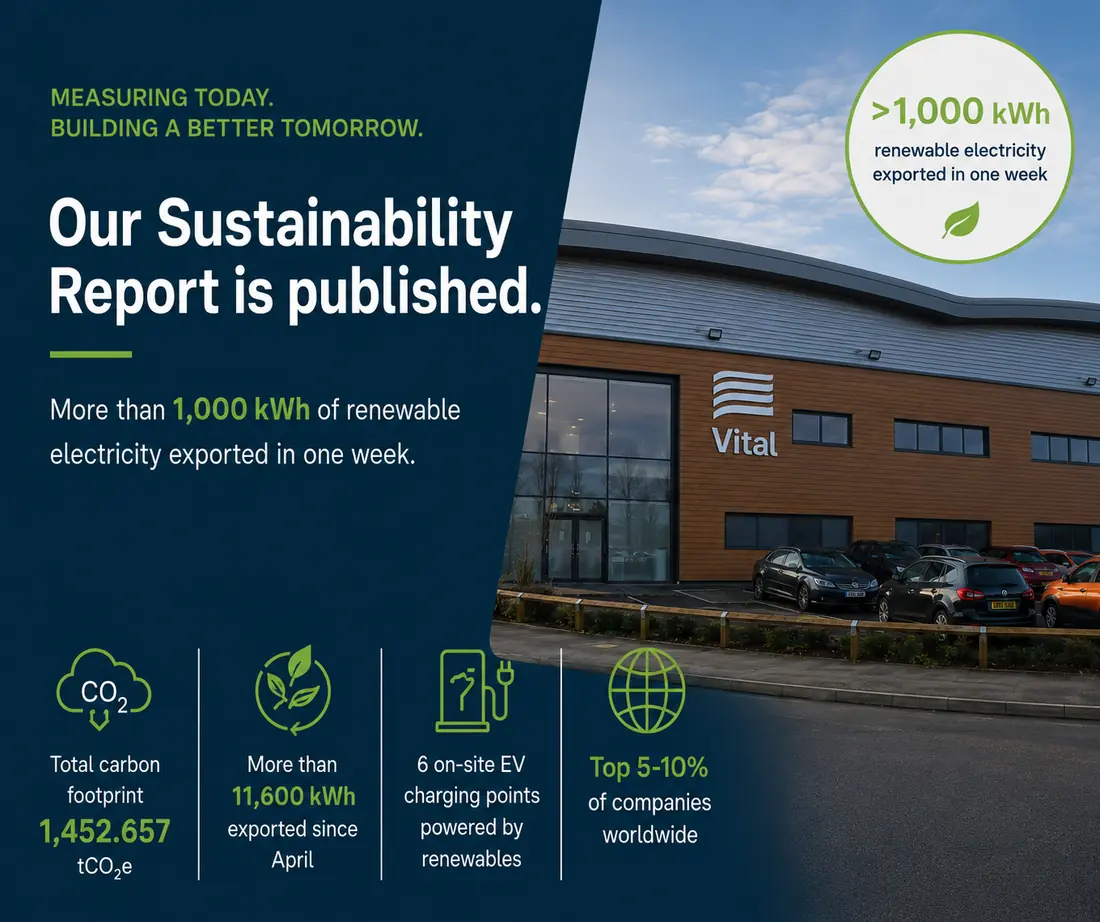
Wider group action
Measured environmental progress
GRP Express is powered by Vital Distribution and benefits from the wider Vital group’s work to measure emissions, invest in renewable energy and improve operational efficiency.
Figures reported by Vital GRP in July 2026. They relate to wider group operations and are not product-level carbon declarations.
Your order
Five ways to buy with less waste
Good information helps us route material, cutting and delivery more efficiently.
- Confirm the required load, span, depth and aperture.
- Use exact cut dimensions and consolidate your cut list.
- Combine compatible items into fewer deliveries where practical.
- Protect clean offcuts so they remain suitable for reuse.
- Ask our team before ordering if the specification is uncertain.
Clear answers on GRP sustainability
Is GRP a sustainable material?
GRP can support a more sustainable infrastructure outcome when it is correctly specified and assessed over the full life of the asset. Durability, corrosion resistance, low maintenance and lightweight handling can reduce replacement cycles, maintenance visits and site disruption.
Can GRP be recycled?
GRP is not suitable for household or conventional mixed-plastic recycling. Specialist commercial processes can reduce clean, segregated material into prepared fragments for assessed reuse routes. Availability, acceptance and destination must be agreed in advance.
Can I return GRP waste to GRP Express?
Please speak to us before sending any material. The appropriate route depends on product, condition, contamination, quantity and location. Material must not be returned without prior agreement.
Is the lightest GRP product always the lowest-carbon option?
No. A lighter product is not automatically the better environmental choice if extra depth, reinforcement or support is needed to achieve the same performance. Compare complete installed systems against the same load, span and deflection requirements.
How should GRP be compared with steel?
Compare the full installed duty: load, span, support arrangement, transport, installation, corrosion exposure, maintenance, design life and replacement risk. A material-only comparison can miss the largest whole-life effects.
Bring the whole requirement together.
Send the environment, dimensions, quantities, cut plan, delivery needs and any environmental evidence your project requires.