
GRP EXPRESS PRODUCT SUPPORT
GRP Repair Materials
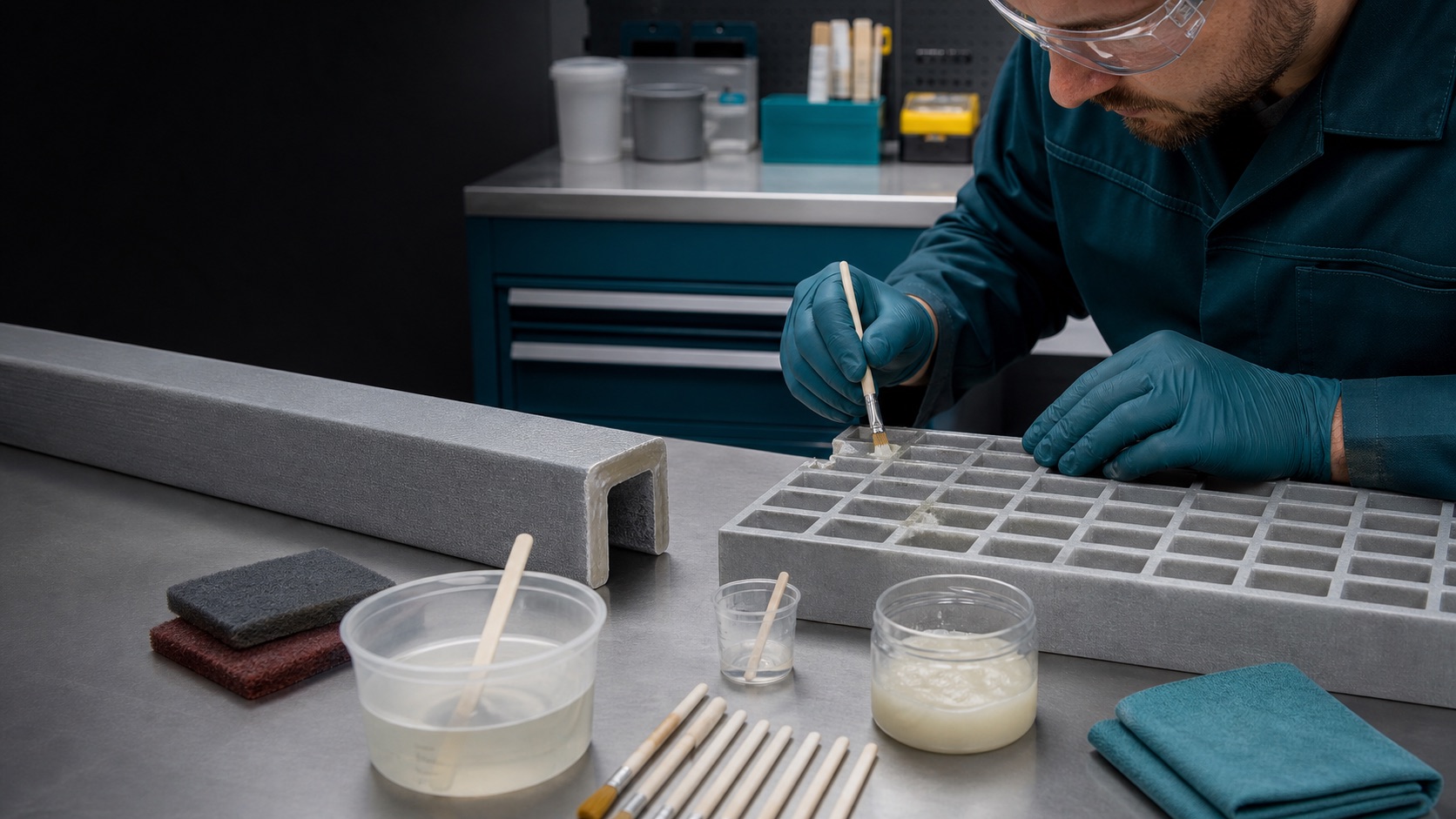
Plan compatible GRP repair and edge-sealing materials around the damage, product construction, exposure and required return to service.
Complete the order
Choose the support you need
Move directly to the fixing, preparation or sample route that matches the job. Send drawings or photographs when the detail is not straightforward.
Where repair materials are used
Site trimming
Repair materials can support finishing, sealing or making good after cutting and fitting.
Maintenance work
Useful for planned maintenance where minor chips, edges or worn details need attention.
Installation support
Can be included alongside adhesives, sealants, fixings and cutting accessories for a fuller installation package.
Why match repair materials to the application?
- Repair needs vary by product type, surface finish and site exposure.
- Edges, cuts and local damage may need different preparation.
- Outdoor, wet or chemical environments can affect accessory choice.
- Technical support helps avoid ordering the wrong maintenance materials.
Choosing repair materials
Start with the product being repaired, the extent of the issue, surface condition and environment. Photographs are especially helpful for deciding whether repair materials, replacement parts or cut-to-size supply are the better route.
Related pages include adhesives and sealants, cutting blades and tools and installation guides.
Useful details to send
- Product type and location of repair.
- Photos of the affected area if possible.
- Indoor, outdoor, wet or chemical exposure.
- Whether replacement parts are also required.
Need help with a GRP repair?
Send a short note and a photograph where possible and GRP Express can help identify practical next steps.
Repair classification guide
First classify the damage: cosmetic, protective or structural
Repair materials can seal prepared edges, restore a surface coating or complete an approved local repair. They should not be used to conceal cracking, delamination, crushed laminate or a damaged load path without assessment.
Record the damage
- Photograph location, extent and orientation.
- Identify impact, overload, cutting or environmental cause.
- Check nearby supports, holes and connections.
- Isolate the area if safe capacity is uncertain.
Define the repair
- State whether it is edge sealing, coating or laminate repair.
- Match resin and preparation to the original product.
- Control removal of damaged material.
- Define cure and return-to-service criteria.
Close out
- Record product, batch and conditions.
- Inspect adhesion, finish and remaining damage.
- Update asset and maintenance records.
- Monitor the repaired area where required.
Structural repairs require a repair design
If damage affects member capacity, grating load paths, connections or fall protection, obtain competent assessment and a defined repair or replacement instruction. A surface resin alone does not restore verified structural performance.
GRP-repair FAQs
Can exposed fibres simply be painted over?
Only where the damage is assessed as superficial and the approved preparation and compatible sealing system are followed.
When should a damaged part be replaced?
Replacement should be considered where the load path, connection, geometry or remaining laminate cannot be reliably assessed or restored.
Can a crack be filled with adhesive?
Not as a generic repair. The crack cause, depth, extent and structural significance must be assessed before a repair method is selected.
What evidence should a repair record contain?
Record the asset and location, damage, cause, photographs, repair instruction, materials and batches, preparation, conditions, cure, inspection and approval.