


Water and wastewater sites are demanding places for access materials.
Walkways, platforms, trench covers, stair treads, handrail systems and maintenance access routes are often exposed to moisture, chemicals, washdown, weather and constant operational use. In these environments, the material choice matters.
That is one of the reasons GRP has become such a practical option across water treatment works, wastewater plants, pumping stations, reservoirs, chemical dosing areas and service access routes.
At GRP Express, we supply GRP materials for customers who need corrosion-resistant, lightweight and practical access products for both small maintenance works and larger project packages.
Corrosion Resistance Matters
Traditional steel products can perform well in many environments, but water and wastewater sites are particularly challenging.
Moisture, chemicals, treatment processes and outdoor exposure can all accelerate corrosion. Once corrosion begins, it can create maintenance issues, safety concerns and costly replacement work.
GRP does not rust in the same way as steel. This makes it well suited to exposed access areas, wet service routes, chemical dosing zones, tank areas, inspection walkways and drainage-related applications.
For contractors and maintenance teams, this can reduce the need for frequent repainting, recoating or replacement.
Safer Access in Wet Conditions
Many water and wastewater environments involve wet underfoot conditions.
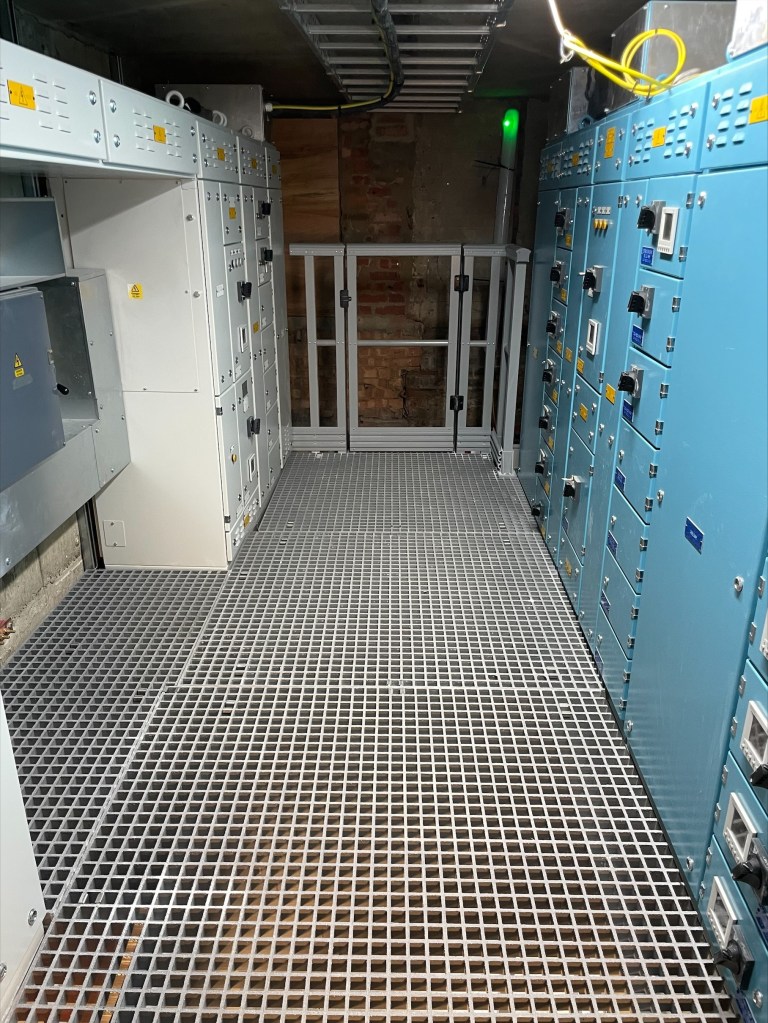
Open mesh GRP grating allows water and debris to pass through the walking surface, helping to reduce standing water on access routes. The integral gritted surface also supports slip resistance, which is especially important on walkways, platforms, stair treads and maintenance areas.
GRP grating can be used for:
- Treatment works walkways
- Pumping station access routes
- Chemical dosing platforms
- Trench covers and drainage covers
- Tank access areas
- Inspection platforms
- Stair treads and landing areas
- Service and maintenance routes
Where the correct grating type, span and fixing method are selected, GRP provides a practical route for creating safer access in difficult environments.
Lightweight Materials for Easier Handling
GRP is significantly easier to handle than many traditional metal alternatives.
This is particularly useful on operational water and wastewater sites, where access can be restricted and installation areas may be awkward. Lightweight panels, profiles and handrail components can make site handling simpler and may reduce the need for heavy lifting equipment in some situations.
For replacement works, this can be a real advantage.
A maintenance team may need to replace a damaged cover, upgrade a walkway section, install new stair treads or modify an existing access route. GRP materials can often make that process quicker and easier to manage.
Low Maintenance for Operational Sites
Water and wastewater sites are live operational environments.
Access systems need to be durable, safe and dependable, but they also need to avoid creating unnecessary maintenance burden. GRP is often selected because it offers a strong whole-life case.
It is corrosion resistant, lightweight, slip resistant and suitable for repeated exposure to wet and aggressive environments. For site owners and contractors, this makes it a practical choice where long-term performance matters.
Choosing the Right GRP Product
Not every GRP product is suitable for every application.
The right choice depends on the use, span, loading, environment, foot traffic, fixing method and any visibility or contrast requirements.
Common GRP Express product options for water and wastewater environments include:
- Standard mesh GRP grating for general access routes
- Mini mesh or micro mesh grating where smaller openings are required
- Solid top GRP grating where a covered walking surface is preferred
- GRP stair treads for access stairs
- GRP handrail components for edge protection
- GRP profiles for fabrication and support details
- Grating clips and fixings for secure installation
- Cut-to-size panels for site-specific openings
The most important point is to select the right product for the job rather than treating all GRP grating or components as the same.
Support for Small Works and Larger Packages
GRP Express is being built to support both small orders and larger material requirements.
That might mean a single replacement panel, a small number of clips, several stair treads, a batch of standard mesh grating panels or a larger package of grating, profiles and handrail components for a project.
For water and wastewater customers, this flexibility is important. Some requirements are urgent maintenance needs. Others form part of planned upgrades, framework works or new access installations.
GRP Express gives customers a simpler route to source the right materials, with practical support available where product selection or cutting requirements need review.
A Practical Material for Demanding Sites
GRP is not used in water and wastewater environments by accident.
It solves real problems: corrosion, wet conditions, difficult handling, maintenance burden and safe access.
For contractors, buyers and site teams, the value is straightforward. GRP materials can help create durable, safer and easier-to-maintain access routes across some of the most demanding operational environments.
Need GRP grating, stair treads, handrail components or profiles for a water or wastewater site? Send your requirements to GRP Express and we will help identify the right material route.
Listen: GRP in water and wastewater
Prefer to listen? This dedicated GRP Unpacked episode explores why GRP suits demanding water and wastewater environments. A full accessible transcript is included.
Leave a Reply